
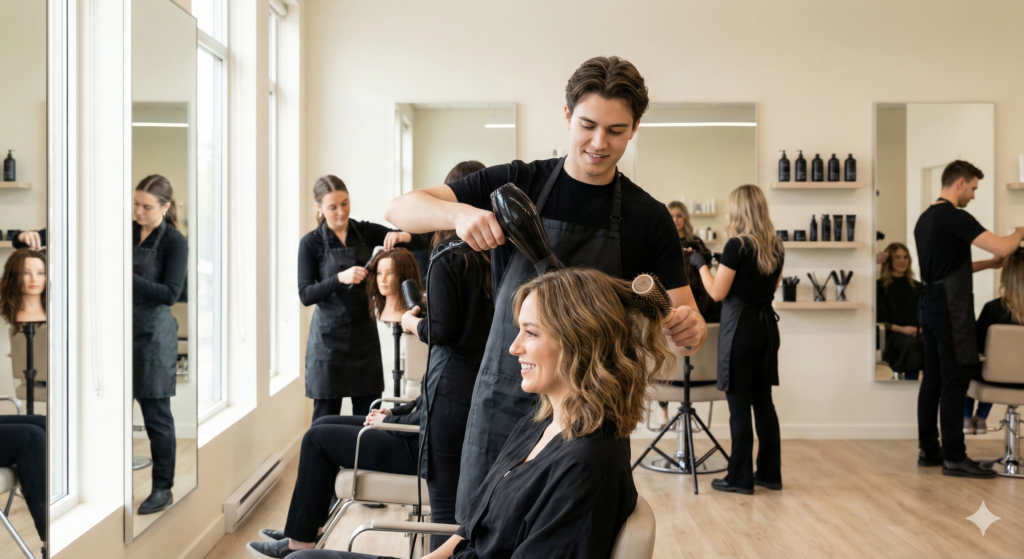
The hairstyling industry in 2026 is no longer driven only by fashion weeks or celebrity looks. What truly defines success today is skill adaptability—the ability to combine technique, personalization, hair health, and efficiency. For salon academy graduates, mastering trends is not about copying styles, but about understanding why clients want them and how to deliver them safely and consistently.
Here are the most important hairstyling trends for 2026 that every salon graduate must master to stay relevant, employable, and future-ready.
- Scalp-First Styling (Health Before Aesthetics)
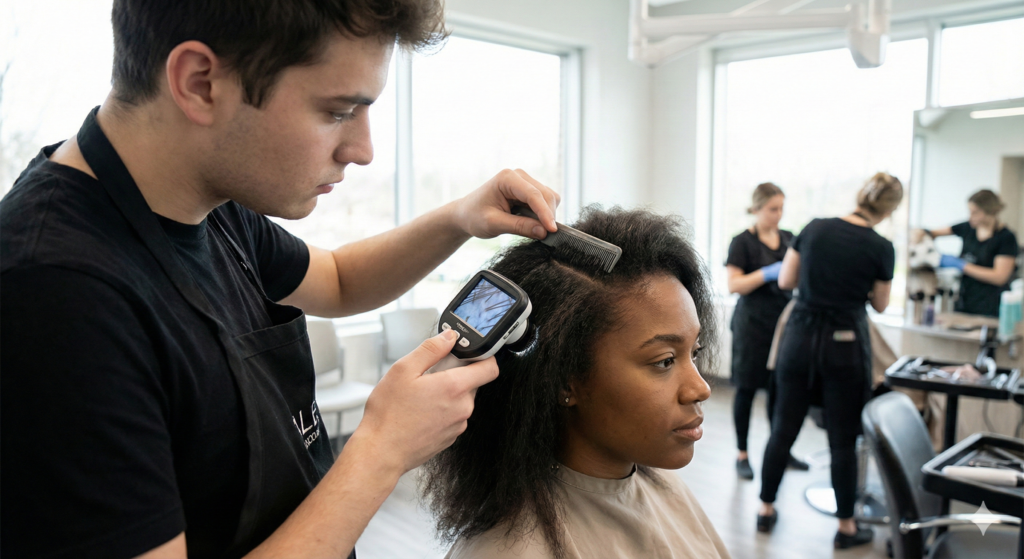
In 2026, styling begins at the scalp. Clients are more aware of hair fall, thinning, dandruff, and sensitivity, and they expect stylists to understand the basics of scalp health.
Graduates must know:
- How scalp condition affects styling results
- When styling can worsen scalp issues
- How to prep the scalp before blow-drying, coloring, or heat styling
Stylists who ignore scalp health are losing clients. Those who understand it are gaining trust—and repeat bookings.
2. Personalized Haircuts Over Trendy Cuts
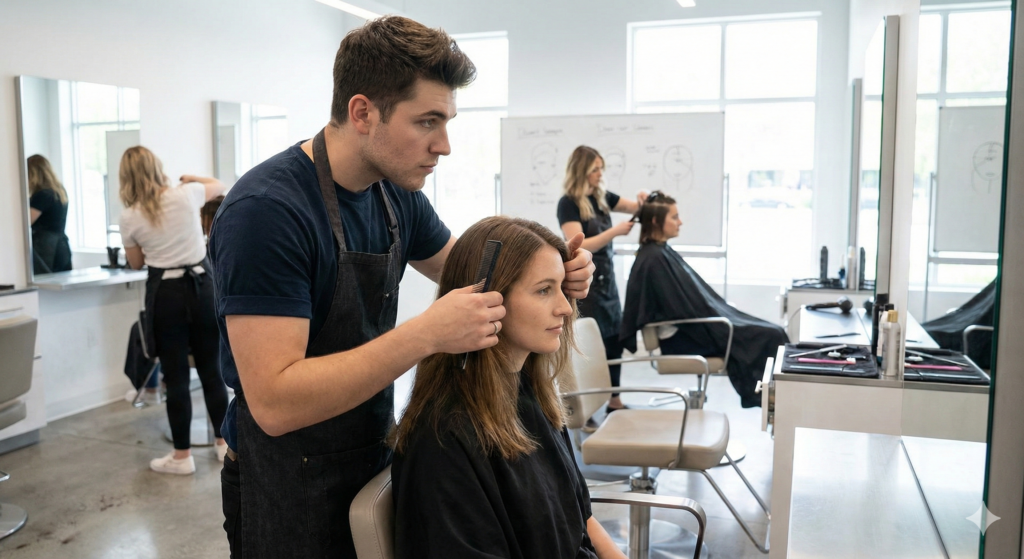
Generic haircuts are fading. The trend now is customized cutting based on:
- Face shape
- Hair density and texture
- Lifestyle and maintenance ability
Graduates must master:
- Sectioning logic, not just patterns
- Weight distribution for different textures
- How to modify one haircut for multiple clients
In 2026, a graduate is judged not by how well they copy a cut, but by how well they adapt it.
3. Natural Texture Enhancement
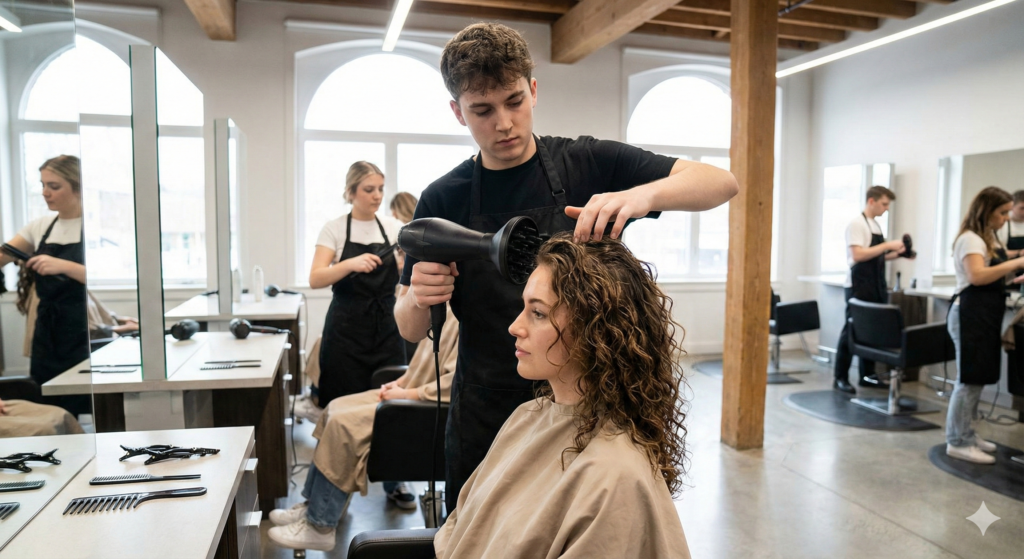
Instead of forcing hair into straight or overly polished looks, clients want their natural texture enhanced—waves, curls, coils, and volume included.
Key skills graduates must master:
- Curl-specific cutting techniques
- Diffuser styling and air-dry methods
- Product layering for texture control
This trend is especially strong because it reduces heat damage and maintenance, aligning with hair-health awareness.
4. Low-Maintenance Color Styling
While this is a styling blog, color and styling are now inseparable. Graduates must understand how styling works with modern color trends like:
- Soft balayage blends
- Root-shadow techniques
- Dimensional, natural finishes
Stylists must know how to style hair so color looks fresh for weeks—not just on day one.
5. Heat-Smart Styling Techniques
Clients still want styled hair, but with less damage. Heat-smart styling is a must-have skill.
Graduates should master:
- Correct temperature selection for hair types
- Heat-free styling alternatives
- Finishing techniques that reduce re-styling
Knowing when not to use heat is now considered a professional skill.
6. Effortless, Wearable Finishes
Over-styled looks are declining. The demand is for:
- Soft blowouts
- Natural movement
- Styles that last through the day
Graduates must practice:
- Brush control
- Minimal product usage
- Longevity-focused finishing
Clients want styles that survive humidity, travel, and daily life—not just photos.
7. Men’s Styling Evolution
Men’s hairstyling in 2026 is more refined and personalized. Graduates must master:
- Scissor-over-comb precision
- Natural fades and tapers
- Beard-hair balance
Men now expect consultation, not just trimming. Academies that ignore men’s styling are limiting their students’ careers.
8. Client Consultation as a Styling Skill
Consultation is no longer optional. It is part of styling mastery.
Graduates must learn:
- How to ask the right questions
- How to explain realistic outcomes
- How to recommend styles based on lifestyle
A technically strong stylist who cannot consult well will struggle in modern salons.
Why These Trends Matter for Salon Academy Graduates
Salon owners in 2026 are hiring graduates who:
- Can work independently faster
- Understand hair health, not just looks
- Reduce redo rates and client complaints
Mastering these trends increases employability, confidence, and long-term career growth.
Q & A: Common Questions from Students and New Graduates
Q1: Do I need to learn all trends to succeed as a stylist?
No. You need to master foundational skills that allow you to adapt to trends. The trends listed above are built on strong basics, not shortcuts.
Q2: Is scalp health really part of hairstyling?
Yes. Poor scalp condition affects volume, hold, shine, and hair fall. Clients now expect stylists to understand this.
Q3: Are traditional haircuts becoming outdated?
No. Traditional techniques are still essential—but they must be customized. Rigid, one-pattern cuts are outdated.
Q4: Will heat-free styling replace tools completely?
No. Heat tools remain important, but professionals are expected to use them selectively and safely.
Q5: How can a salon academy prepare students for 2026 trends?
By teaching consultation, texture handling, scalp awareness, and real-world styling scenarios—not just mannequin work.
Final Thought
The hairstylist of 2026 is not just a trend follower. They are a problem solver, consultant, and hair-health-aware professional. Salon academy graduates who master these hairstyling trends will not only find jobs faster—but will build stronger, longer-lasting careers.